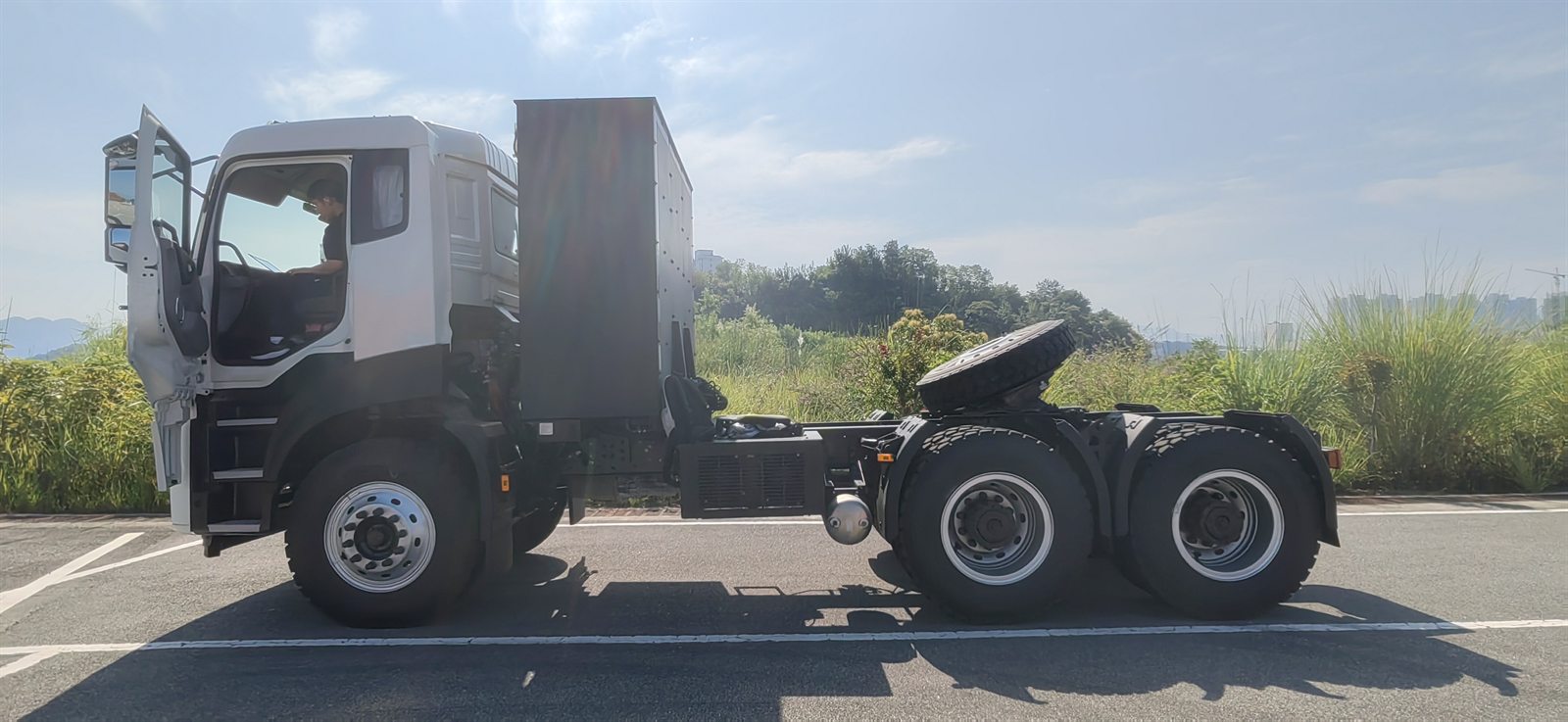
Planning principle: a 600 kWh battery is a capacity figure, not a promise of daily range or charging time. The useful plan begins with measured route energy and the time when trucks are physically available to charge.
Start with the route, not the charger nameplate
A depot can install a high-output charger and still miss dispatch if the tractor returns late, the grid connection is constrained or several vehicles need the same equipment at once. Begin by mapping every loaded and empty leg, gross combination weight, elevation change, road speed, traffic, waiting time, auxiliary use and seasonal temperature. Record when the tractor leaves, returns and can remain connected without interrupting work.
Use route trials or reliable fleet telematics to establish energy consumption. Do not use a passenger-EV range calculation or a single brochure number. Heavy tractor consumption changes with trailer, payload, grade, speed, weather and driver operation. A port shuttle with predictable loops has a different charging opportunity from regional transport with variable queues and return times.
Which Dongfeng tractors offer a 600 kWh option?
The current project catalogue confirms 600 kWh battery options on selected TE-series 6x4 tractors. The table below lists only published project data. It does not imply that every battery, connector or axle configuration is available in every market.
| Model family | Axle | Reference GCW | Battery options | Motor rated / peak | Charging reference |
|---|---|---|---|---|---|
| TE8L / TE8K | 6x4 | 49 t | 400 / 466 / 600 kWh | 315 / 510 kW | Dual-gun 500-600 A; GB or EU by model |
| TE9L | 6x4 | 49 t | 400 / 497 / 600 kWh | 350 / 520 kW | Dual-gun 600 A |
| TE9B | 6x4 | 65 t | 400 / 497 / 600 kWh | 350 / 520 kW | Dual-gun 600 A |
| TE8M | 6x4 | 80 t | 466 / 497 / 600 kWh | 400 / 550 kW | Dual-gun 600 A |
| TE8P | 6x4 | 120 t | 400 / 600 kWh | 400 / 550 kW | Dual-gun 600 A |
Reference GCW helps define the application, but it does not replace route engineering or local compliance review. See the Dongfeng TE electric tractor range and the detailed TE8P configuration guide before requesting a final configuration.
Build an energy budget for each shift
Separate loaded and empty operation because their consumption can differ materially. A useful worksheet calculates loaded distance multiplied by measured loaded consumption, plus empty distance multiplied by measured empty consumption, plus energy for cab climate control and other auxiliaries. Add a documented operating reserve for route disruption, queues, weather and battery protection. The reserve should be a fleet policy based on local evidence, not an arbitrary claim from a supplier.
Next, define a normal state-of-charge window. For planning, usable energy equals nominal battery capacity multiplied by the selected SOC window. The SOC limits must follow the vehicle documentation and operating policy. A narrower routine window can leave more contingency, while a wider window may reduce flexibility if the truck returns late. Do not treat the full 600 kWh nameplate capacity as automatically available for every dispatch.
Compare the shift requirement with usable planned energy. If one shift consumes more than the normal window, examine a controlled opportunity charge, a different route assignment, a larger operational buffer or another configuration. If consumption is comfortably lower, the depot may be able to stagger charging and reduce coincident electrical demand.
Translate vehicle current into a depot power plan
The catalogue reference of dual-gun 500 A or 600 A describes charging current, not charging power. Current in amperes cannot be converted to kilowatts without voltage. Actual power is also limited by the charger, cable arrangement, vehicle charging acceptance, battery SOC, battery temperature, thermal management and the site's available electrical capacity. Charging power normally changes during a session, so a peak value should not be used as the average.
Ask the electrical designer to calculate transformer capacity, switchgear, cable routes, protection, demand management and expansion space. Model simultaneous charging, not just one vehicle. Ten tractors returning together can create a very different peak from ten tractors staggered across the night. Smart charging can prioritize the next dispatch and cap total demand, but the control logic must be tested against the real schedule.
Connector and communication standards also require confirmation. Project data identifies GB or EU interfaces on selected models, depending on configuration. The order specification, charger, destination-market rules and depot equipment must agree before shipment. An adapter should never be assumed to solve an incompatible charging system.
Three common charging scenarios
Single-shift depot return
Tractors work a defined daytime shift and remain at the depot overnight. This gives the longest connection window and may allow staged charging. The critical checks are total overnight energy, the latest-return vehicle, first dispatch in the morning and whether maintenance or trailer handling reduces connection time.
Two-shift regional operation
Available charging time is shorter and schedule variance matters more. Measure handover time, driver breaks and loading queues. A short opportunity window only helps when the truck reliably reaches the charger, the charger is free and the energy delivered is enough to protect the second shift's reserve.
Port, terminal or controlled industrial loop
Repeated routes can make consumption easier to measure, but queues, high GCW and intensive utilization can raise both energy and charger availability risk. Locate charging so it does not conflict with traffic flow. Consider redundancy: one failed connector or blocked bay should not stop the whole fleet.
Temperature, thermal management and operating margin
Battery temperature can affect charging acceptance and energy use. Cold or hot conditions also increase climate-control demand and may change route consumption. Build separate seasonal cases instead of one annual average. Confirm the vehicle's thermal-management strategy, preconditioning procedure if applicable, and charger operating temperature with the final supplier documentation.
Keep an operational margin for unplanned detours, congestion, charger downtime and gradual changes in fleet duty. This is not a claim about degradation or warranty; those subjects require the final battery and warranty documents. The planning objective is simple: normal dispatch should not depend on every assumption being perfect.
Information to prepare before requesting a configuration
- Destination country, left- or right-hand drive requirement and applicable vehicle regulations.
- Tractor quantity, trailer type, target payload and maximum required GCW.
- Loaded and empty kilometres per shift, number of shifts and weekly operating days.
- Route grade, average speed, road surface, traffic and expected waiting time.
- Seasonal minimum and maximum temperature and auxiliary equipment use.
- Return times, dispatch deadlines, driver breaks and realistic charging windows.
- Site voltage, available transformer capacity, demand limit and planned charger count.
- Required connector standard, redundancy plan and future fleet expansion.
This information allows the vehicle and charging system to be reviewed as one operation. It is more useful than asking only for the largest battery or the fastest charger.
Frequently asked questions
Does 600 A dual-gun charging mean 600 kW?
No. Amperes measure current and kilowatts measure power. Voltage is required to calculate power, and actual charging is further limited by the charger, vehicle, SOC and temperature.
Can you guarantee a charging time for a 600 kWh pack?
Not from capacity and maximum current alone. A reliable estimate requires the charging curve, pack voltage, starting and target SOC, charger output, site power and temperature conditions.
Is the largest battery always the best choice?
No. A larger pack must still match the route, GCW, payload priorities, charging window, site capacity and operating reserve. Route data should lead the decision.
Can the same charger serve GB and EU-interface trucks?
Compatibility must be confirmed for the exact vehicle and charger. The final order specification and destination-market infrastructure need matching connectors and communication standards.