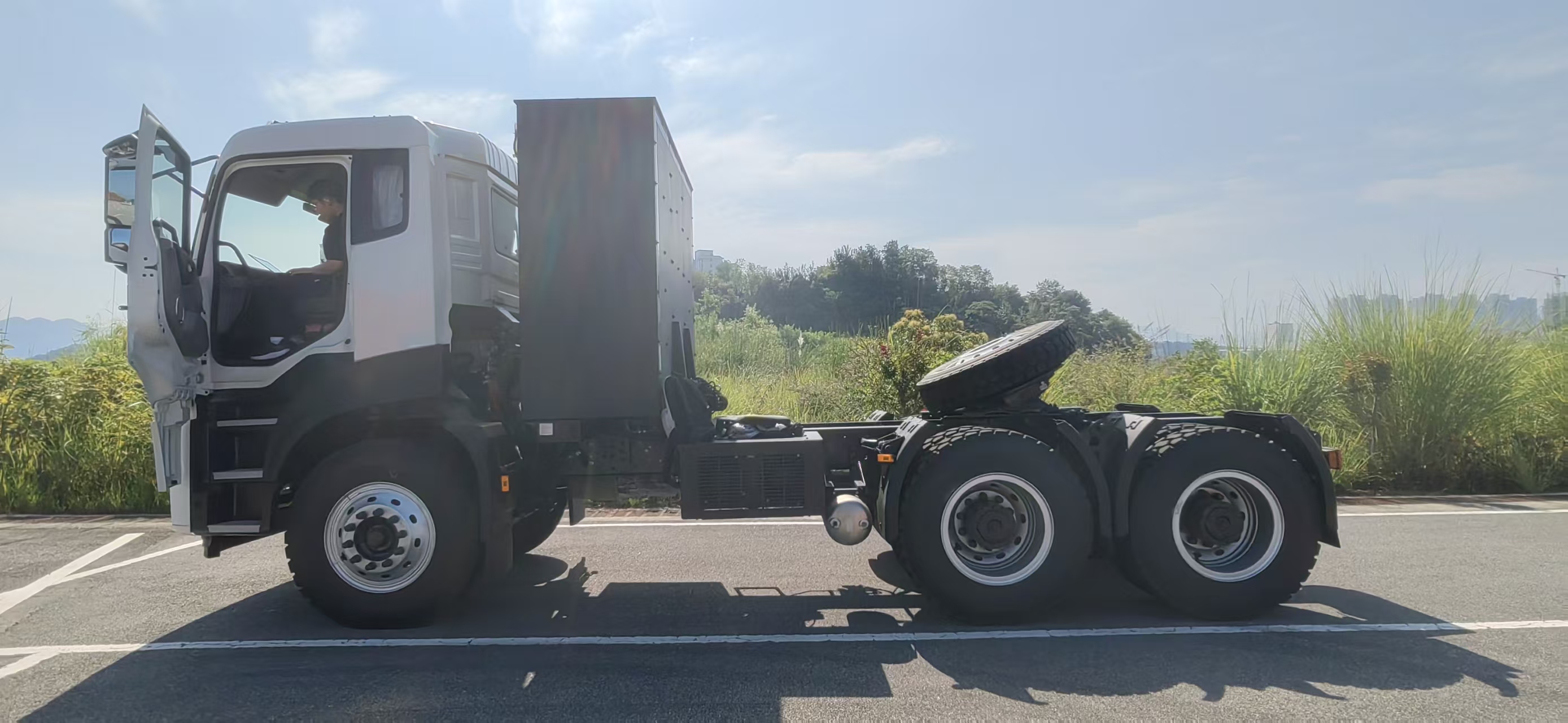
TE9Y configuration at a glance
The supplied worksheet identifies the vehicle as DFH4250YBEV8-TE9Y-902. It is a 6×4 electric tractor configuration with 120,000 kg gross combination weight (GCW) listed. Its headline components are a 600.92 kWh battery, an electric drive motor with 315 kW rated and 510 kW peak output, and a dual-gun 600 A DC charging entry. Those figures make the configuration relevant to heavy combination work under review, but they are not evidence of a particular payload, trip range, charging time or Pakistan approval.
| Worksheet item | Listed value | What the buyer should verify |
|---|---|---|
| Model code | DFH4250YBEV8-TE9Y-902 | Exact build code, steering side and market order sheet |
| Drive layout | 6×4 tractor | Axle ratings, trailer coupling and combination approval |
| Gross combination weight | 120,000 kg | Applicable rating, route permissions and each axle load |
| Kerb weight | 14,450 kg | Delivered tare with final options and accessories |
| Battery | 600.92 kWh as listed | Battery chemistry, usable energy definition, pack build and documentation |
| Motor | TZ460XS-LKM2810; 315 kW / 1,650 N·m rated; 510 kW / 3,100 N·m peak | Continuous limits, control strategy and final supplier data |
| Transmission | AMT, J4S280 DD; listed ratios 8.67, 4.57, 2.29, 1.00 and reverse 8.67 | Final ratio set, operating instructions and service support |
| Charging | Dual-gun DC, 600 A | Per-gun versus combined rating, inlet, protocol and charge curve |
| Dimensions / wheelbase | 7,795 × 2,550 × 3,270 mm; 3,800 + 1,450 mm | Final dimensional drawing, fifth-wheel position and trailer geometry |
| Axle references | Front DF701S / 7 t; rear DF300H / 25 t × 2 as entered | Rating basis and legal axle-load interpretation in the destination market |
The specifications above are transcribed from the supplied TE9Y workbook. Where the worksheet's bilingual text is unclear, this guide does not infer a value. Ask for a signed, build-specific technical schedule before comparing quotations.
What a 120 t GCW rating does and does not tell you
GCW refers to the combined vehicle and trailer at the stated gross combination rating. It is not a statement that the tractor can carry 120 tonnes as freight. Nor can payload be calculated by subtracting the tractor's listed 14,450 kg kerb weight from GCW: the trailer tare, coupling loads, axle distribution, completed tractor mass, cargo position and the applicable operating limits all matter. Treat GCW as one selection parameter, then have the full combination assessed for the planned work.
For a Pakistan project, map the actual operating path from origin to destination rather than treating “Pakistan” as one duty cycle. Record loaded and empty legs, stops, gradients, surface changes, speed bands, queuing and seasonal operating conditions. Confirm each bridge, road segment, terminal entrance and loading area against the intended combination and current local requirements. This article does not assert that a 120 t combination is permitted on any particular route.
Also validate the tractor-trailer geometry. The worksheet lists a 3,800 + 1,450 mm wheelbase and overall dimensions of 7,795 × 2,550 × 3,270 mm. Ask for a dimensioned drawing showing fifth-wheel location, kingpin compatibility, turning envelope and clearances with the chosen trailer. A value in a worksheet should not substitute for a final vehicle drawing.
Read the motor and transmission figures as a system
The listed motor has 315 kW rated output and 510 kW peak output, with corresponding rated and peak torque entries of 1,650 N·m and 3,100 N·m. Peak output is not a guarantee of continuous tractive effort, speed on a grade or energy use. For a heavy tractor, ask the engineering team to assess the complete combination, including motor limits, transmission ratios, axle ratio, tyre selection, thermal controls, braking and the work-rest pattern.
The worksheet names an AMT J4S280 DD transmission and provides ratios of 8.67, 4.57, 2.29, 1.00 and reverse 8.67. Confirm that this exact transmission and ratio set belong to the ordered build, and request the shift logic and driver operating guidance. For repeated starts, slow movement, ramps or variable road conditions, discuss the intended use with the vehicle supplier instead of assuming that a peak motor figure alone proves suitability.
The workbook also contains axle references. It shows DF701S / 7 t at the front and DF300H / 25 t × 2 at the rear, but buyers should confirm precisely how the ratings are defined and documented. Do not treat component ratings as permission to exceed a route's axle limits.
Battery capacity and charging need a route plan
The listed 600.92 kWh LFP pack is a nominal configuration figure. It is not a range number. Real energy demand depends on the full vehicle and trailer mass, road profile, speed, traffic, ambient conditions, driver behaviour, auxiliary loads, charging reserve and the battery's usable operating window. The provided sheet does not give a measured kWh/km result or a validated distance per charge, so no range promise can responsibly be derived from it.
Before sizing operations, collect representative route data or run a controlled pilot. For each trip, log start and return state of charge, distance, elevation profile, loaded mass, travel time, stops, ambient temperature, auxiliary use and energy delivered at the charger. Include a reserve for diversions and charger downtime. Use the demanding normal shift—not a best-case run—to test whether the plan works.
The worksheet lists dual-gun 600 A DC charging. Current alone does not establish power or charge duration, and the file does not clarify whether 600 A applies to each gun or the combined system. Obtain the vehicle's charging curve, voltage range, connector and communication details. Then verify charger compatibility, site electrical capacity, simultaneous operation rules, installation scope and the actual dwell window. See the 600 kWh electric tractor charging plan and the charging connector compatibility checklist for planning questions.
Pakistan-specific checks before committing the build
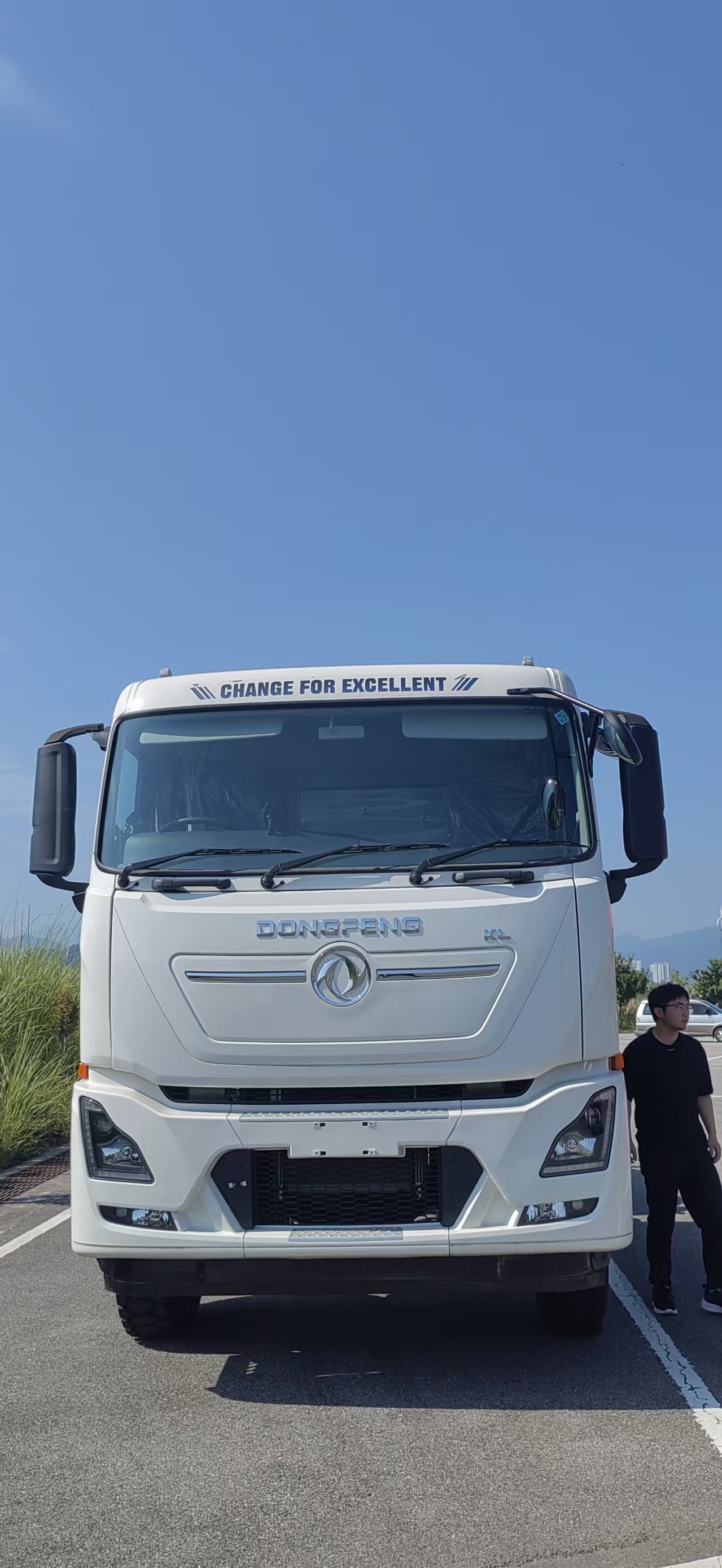
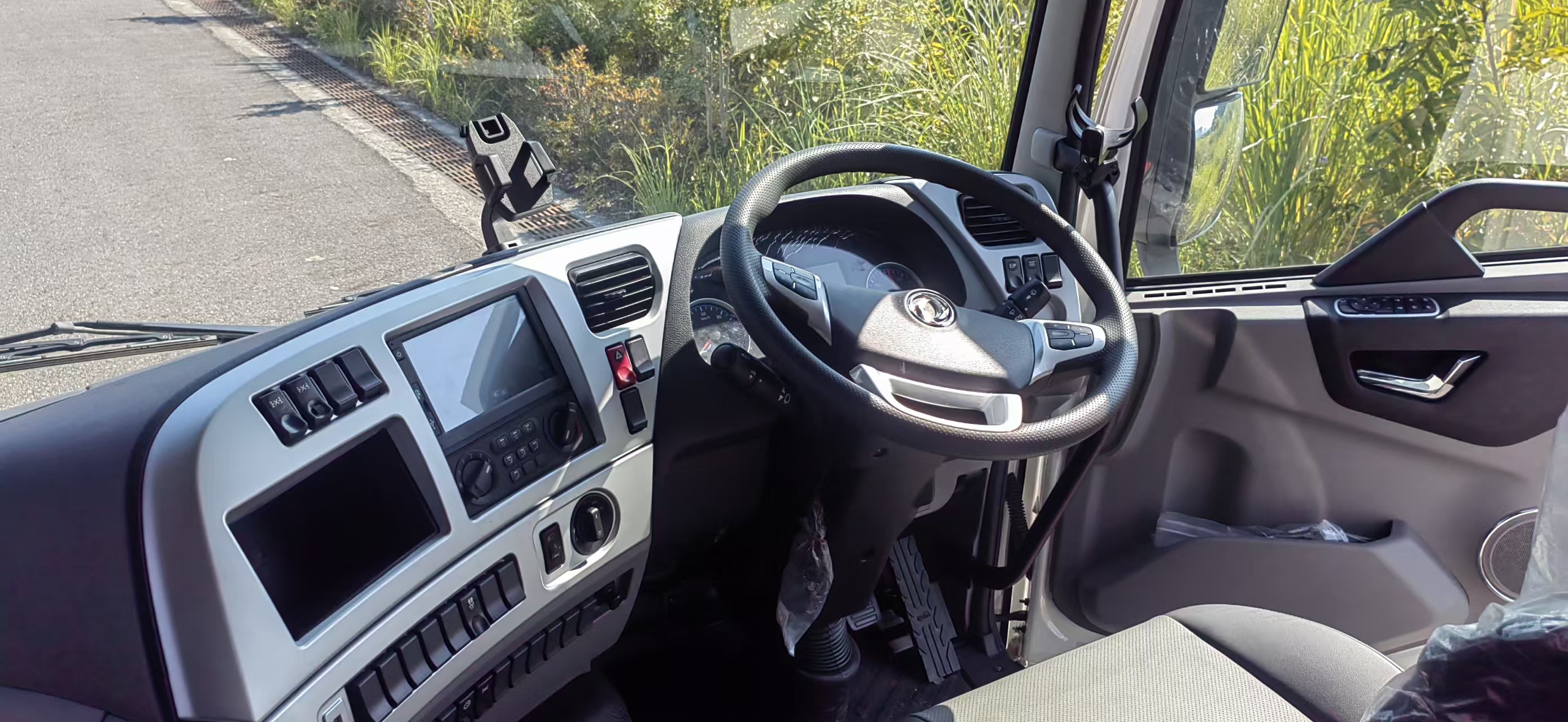
Use the market name to trigger careful local validation, not assumptions. Confirm current registration, import, homologation, vehicle category, dimension, combination-mass and axle-load requirements with the relevant Pakistani authorities and your qualified local import or compliance partner. Confirm that the exact completed tractor and intended trailer can be documented for the intended use. Do not assume that right-hand drive alone establishes compliance; the project catalogue identifies a TE9Y RHD variant, but the steering specification for this order must be written into the build confirmation.
Charging readiness should be checked at the actual depot and any planned intermediate sites. Share the site supply details with the vehicle and charger suppliers, including the electrical service, transformer capacity, charger model, connector, communications, installation constraints and intended shift schedule. Confirm who is responsible for site design, civil works, commissioning, charger maintenance and incident response.
Finally, make support tangible. Agree how diagnostics will be performed, which parts are held locally, how technical cases are escalated, what training is included and what service response is available. Do not infer warranty terms, service coverage or delivery readiness from the model name or battery capacity. Put scope, exclusions and responsibilities into the commercial documents.
Important limits of the available specification
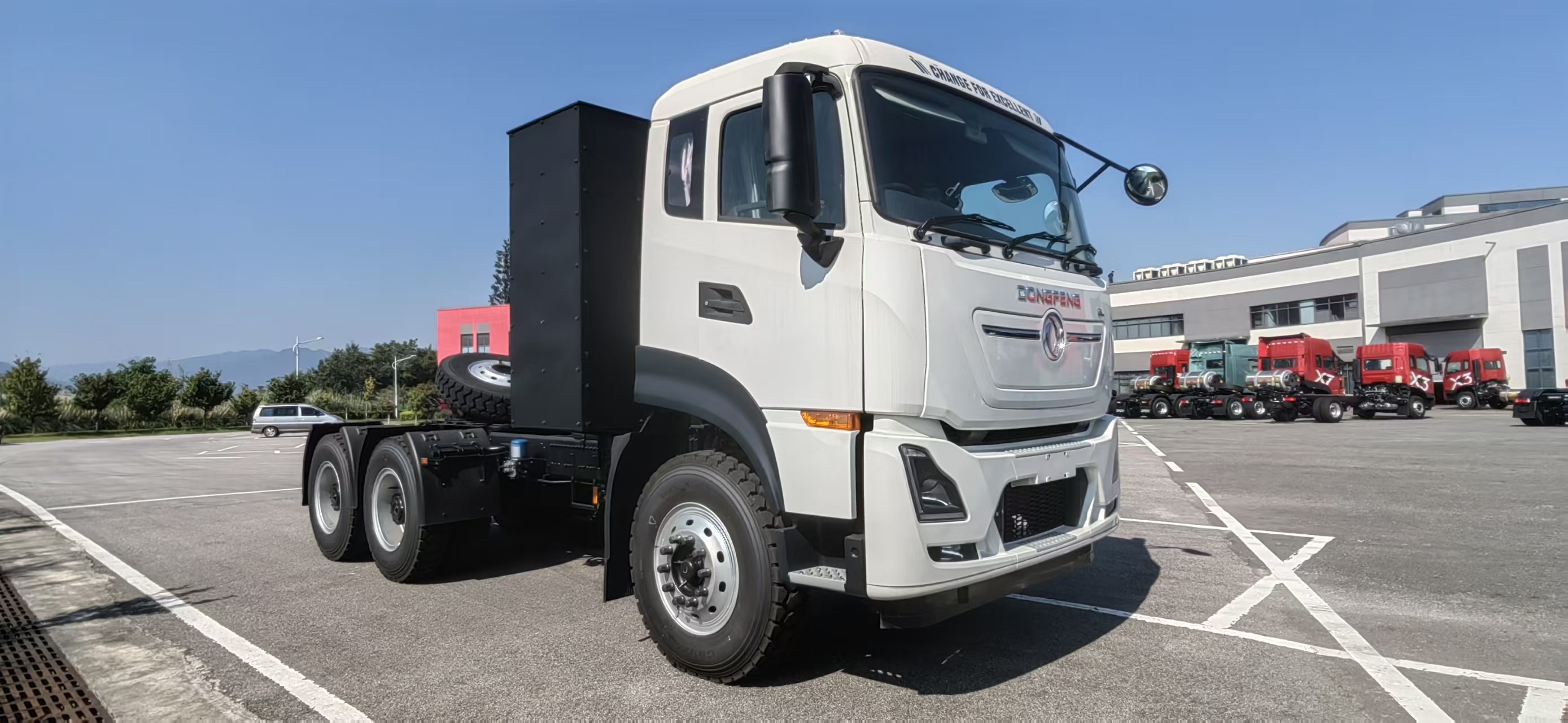
The supplied worksheet supports the model code, dimensions, 6×4 layout, mass fields, selected motor values, transmission entry, battery capacity and charging notation used here. It does not establish a verified range, charging time, payload, price, warranty, delivery date, Pakistani certification or route approval. Some bilingual cell text is not reliably readable, so the article deliberately excludes unclear equipment claims. The workbook's embedded photograph is a reference image and does not by itself prove that every detail shown is the exact TE9Y-902 production build.
Before ordering, ask the supplier to resolve any discrepancies in a signed final specification. If the local use case requires a body, special PTO, additional electrical equipment or a different trailer interface, treat that as a configuration change that needs engineering review and an updated mass and energy assessment.
TE9Y Pakistan buyer checklist
- Confirm the exact model code, right-hand-drive requirement and completed-vehicle specification.
- Define the tractor-trailer combination, loaded and empty masses, cargo, axle distribution and coupling.
- Validate current destination-market approval and every intended route with qualified local partners.
- Obtain final drawings for dimensions, wheelbase, fifth wheel, turning envelope and clearances.
- Verify battery build, usable-energy information, charging curve, connector and charging protocol.
- Survey depot power and charger installation; confirm the shift window and charging contingency.
- Request route energy validation based on measured data, with reserve stated explicitly.
- Agree operator training, diagnostics, service escalation, local parts and written commercial scope.
For a project review, send the country, trailer, target GCW, route map, loaded distance, grade profile, daily schedule and charging-site details through the configuration enquiry page. You can also review the Dongfeng electric tractor range and the right-hand-drive export checklist.
Frequently asked questions
Is TE9Y a 120-tonne payload tractor?
No. The worksheet lists 120,000 kg gross combination weight. Payload is a different quantity and depends on the tractor, trailer, axle distribution, cargo and applicable limits.
What range does the 600.92 kWh pack provide?
No verified range is provided in the worksheet. Use measured energy data for the planned route and include a clearly defined reserve.
Does 600 A dual-gun charging mean a specific charge time?
No. Confirm how the current rating is defined, then obtain the vehicle charge curve and check the charger, connector and site supply.
Can this configuration be registered for Pakistani roads?
The worksheet does not prove local approval. Confirm the current requirements for the exact completed vehicle and intended route with qualified local authorities or compliance advisers.
CONFIGURATION SUPPORT
Planning a TE9Y project for Pakistan?
Share the trailer, route, combination mass, daily schedule and charging-site details for a configuration review.
Request a Configuration